
How Often Should You Service Your AC in Dubai?
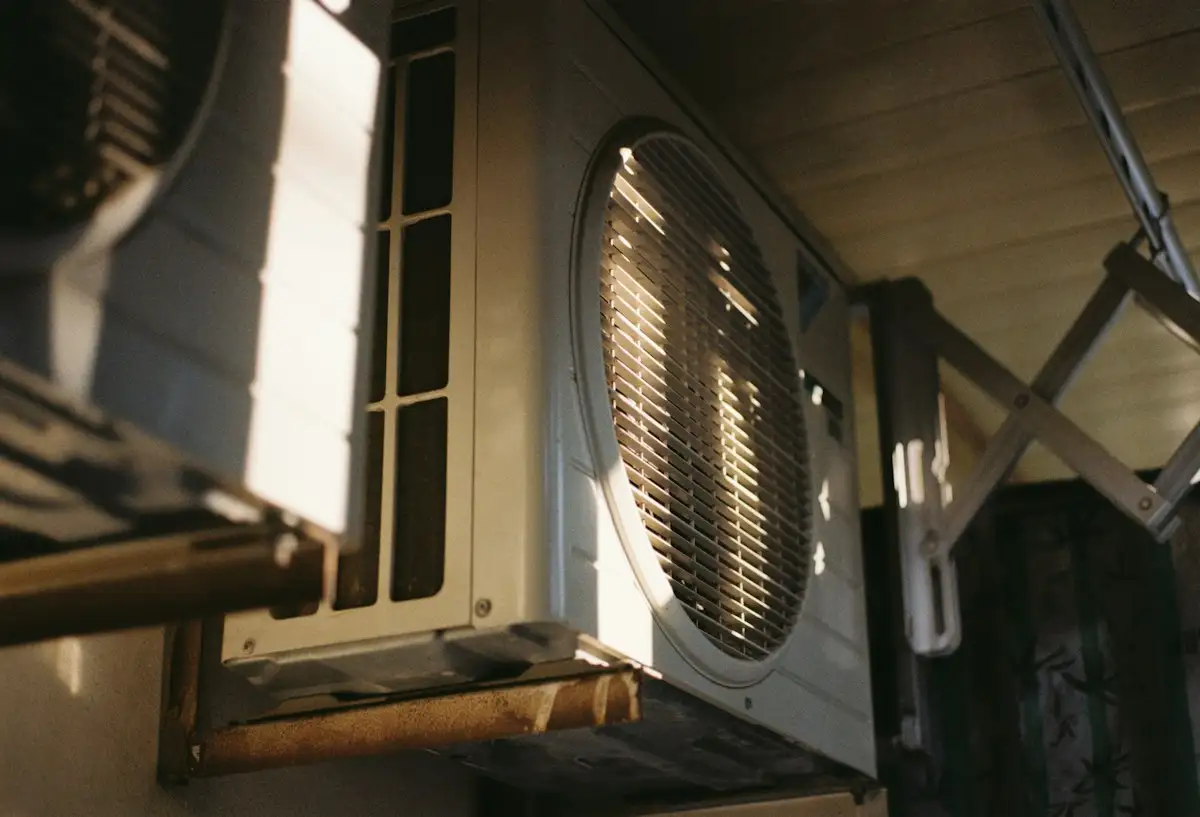
In Dubai, split AC units generally need servicing every 3 months and central or ducted systems every 3-4 months, with a full deep clean before summer in March or April. Villas with condensers exposed to dust and sand often need extra filter checks between full services, especially heading into peak summer.
Most AC manuals and most servicing advice online are written for climates where the unit runs for a few months a year and sits idle the rest of the time. That's not Dubai. Here, an AC unit can run close to year-round, outdoor condensers bake in direct sun for hours a day, and airborne dust and sand work their way into filters and coils faster than almost anywhere else in the region. A servicing schedule copied from a cooler climate will leave you under-maintained right when you need cooling most.
Why Dubai's climate resets the servicing clock
Three things combine to accelerate wear on a Dubai AC system: heat load, dust, and near-constant runtime. Ambient temperatures regularly reach 40-48°C across the peak summer months, which means compressors and fans work at or near maximum output for weeks at a stretch rather than cycling on and off occasionally. Outdoor condenser units, usually mounted on a roof, balcony or external wall, have no real break from direct sun, and in villa compounds near open desert or active construction they pick up fine sand and dust that clogs fins and filters within weeks rather than months. Indoor humidity climbs sharply from June through September too, which increases the condensate a system has to shed and puts more strain on drainage. None of this is unique to one property type — it's the baseline Dubai climate every AC system here operates in, which is why a 'service twice a year' schedule, common advice in milder climates, consistently under-serves systems in this market. A system imported with a manufacturer's recommended interval designed for a temperate climate simply wasn't tested against this combination of heat, dust and runtime, which is one reason local servicing advice tends to diverge from the printed manual.
Split AC vs central or ducted systems: how often each needs attention
Split units are the easiest to keep an eye on because each one has its own accessible filter, and most households notice reduced airflow or a rise in indoor temperature quickly when a filter clogs. Central and ducted systems are different — the filtration and coil access points are less visible, duct runs are longer, and a drop in performance is harder to notice early because it's spread across multiple rooms rather than concentrated in one unit. That's part of why ducted systems generally get a slightly more frequent inspection interval than the headline servicing frequency might suggest: more surface area for dust to settle, and problems that are easier to miss until they've already affected comfort in several rooms at once.
| System type | Recommended servicing frequency | Why |
|---|---|---|
| Split AC units | Every 3 months | Filters and coils clog quickly in Dubai dust; easy to inspect and clean per unit |
| Central / ducted systems | Every 3-4 months | Longer duct runs mean more surface area for dust buildup, harder to self-diagnose |
| Outdoor condensers near dust/construction | Filter checks more often than the full-service interval | Direct exposure to sand and construction dust accelerates fin and filter clogging |
| Pre-summer deep clean | March-April, every year | Clears the system before peak demand and tighter technician availability hit |
Does servicing frequency change between summer and winter?
The baseline interval doesn't really change, but what changes is how much margin for error you have. During peak summer (roughly May through September) a system that's overdue for service is already working at its limit, so a clogged filter or low refrigerant charge that would be a minor inefficiency in winter can tip into a full breakdown in summer, often at the worst possible time. In the cooler months, usage drops and the system runs less, but dust doesn't stop accumulating just because the AC is cycling less often — a unit that sat mostly idle over a mild winter can still need a proper clean before summer demand ramps back up. The safest approach is to treat the quarterly interval as fixed year-round and treat the pre-summer service as non-negotiable regardless of how the system performed over winter.
What happens if you skip or delay AC servicing?
The first cost is efficiency — a dirty filter or coil makes the compressor work harder to move the same amount of cool air, which shows up as a higher electricity bill well before the system actually fails. Beyond that, delayed servicing lets small issues compound: a slightly low refrigerant charge that goes unnoticed for months accelerates compressor wear, and a condensate drain that's partially blocked rather than fully blocked can go unnoticed until it backs up and starts dripping into a ceiling void or wall cavity. In Dubai specifically, the scenario to actually worry about is a full breakdown during peak summer — when a unit that was already running hard with no servicing cushion finally fails, you're not just dealing with a repair bill, you're dealing with an unsafe indoor temperature within hours in a sealed apartment or villa. Preventive servicing is cheaper than emergency repair almost every time, and it's dramatically cheaper than the indirect cost of a mid-summer breakdown.
What's included in a standard AC service visit
- Filter removal, inspection and cleaning (or replacement if beyond cleaning)
- Coil cleaning on both the indoor and outdoor units
- Refrigerant/gas level check, with a top-up if low
- Condensate drain check and clearing to prevent overflow
- Thermostat and control response test
- Electrical connection check at the unit and isolator
- A cooling performance test to confirm output matches the set temperature
A technician who skips straight to the filter and ignores the rest of this list isn't giving you a full service, even if the visit is quick. Refrigerant level and condensate drainage in particular are easy to overlook because they don't show symptoms immediately — a slowly dropping gas charge or a partially clogged drain can both run for weeks looking fine before performance drops noticeably. Asking what's actually being checked on a visit, rather than assuming 'service' always means the same scope, is a reasonable question to put to any provider before booking. A written summary of what was checked and what was found, even briefly, is also worth asking for — it gives you a reference point for the next visit and makes it easier to spot a developing issue across several services rather than treating each visit in isolation.
AMC or pay-per-visit — which servicing model fits your schedule?
An annual maintenance contract bundles scheduled visits, usually quarterly, into a fixed recurring arrangement, and it typically comes with faster priority response if something breaks down between visits. That suits villa owners running multiple split units plus a central system, or anyone who'd rather not have to remember to book a service every few months. Pay-per-visit suits a single-unit apartment or a tenant who expects to move before a full year's contract makes sense — you pay for exactly the visits you use, with no ongoing commitment. The trade-off is that pay-per-visit relies on you actually remembering to book before the quarterly interval slips, and in Dubai that slip is exactly what tends to turn into a summer breakdown.
Signs your AC needs attention before the next scheduled visit
- Weak or warm airflow even with the thermostat set low
- A noticeable rise in your electricity bill with no change in usage
- Water pooling or dripping near the indoor unit
- Grinding, clicking or rattling from the outdoor condenser
- A musty smell when the system starts up
None of these signs mean you need to wait for the next scheduled visit. A fault caught between services is almost always cheaper and faster to resolve than the same fault left to run until the quarterly date comes around, especially if any of these symptoms show up during peak summer when the system has the least margin to absorb a developing problem. Keeping a simple mental baseline of how your system normally sounds and performs makes these changes easier to notice — most residents who catch a developing fault early describe it as 'something just felt off' compared with how the unit usually runs, rather than anything dramatic.
Does servicing frequency differ between villas and apartments?
The underlying schedule — every 3 months for split units, 3-4 months for central systems — holds for both, but villas tend to need more vigilance between visits. A villa's outdoor condenser usually sits exposed on a roof or side yard with no building structure shielding it from direct sun, wind-blown sand or nearby construction dust, and there's no building management handling any shared equipment — it's entirely on the homeowner. Apartments in high-rise towers more often run on a building's central chiller system, where the building handles the main plant and the resident's responsibility is narrower, typically limited to vents, thermostats and sometimes a fan coil unit inside the apartment itself. If your apartment does have its own dedicated split or ducted system rather than chilled water from the building, treat it exactly like a villa system for scheduling purposes. Villas with gardens or pools also tend to accumulate more airborne moisture and organic debris near outdoor units, which is worth mentioning to a technician even outside a scheduled visit if you notice anything unusual nearby. It's worth finding out early in a new tenancy or after moving into a villa exactly which category your cooling setup falls into, since the answer determines who you should actually be calling when something needs attention.
When is the best time of year to schedule AC servicing?
March and April are the highest-value window, because they land after the mild winter lull and before peak summer demand drives up booking lead times. Technicians get booked out fast once the first genuinely hot days hit in May, and if your system develops a fault in June with everyone else's AC failing at the same time, same-day appointments get harder to secure. Booking a pre-summer service in spring, before everyone else remembers to, is the single highest-leverage thing you can do for a trouble-free summer.
Swift Tech Technical services split, central and ducted AC systems across Dubai villas and apartments, with AMC options for homes that want scheduled visits locked in before summer. Get in touch to book a pre-summer service before the season's demand kicks in.